Pour que survive la langue nakota
Dans toute l’Amérique du Nord, les langues autochtones risquent de disparaître. «Quand tu ne connais ni ta langue ni ta culture, tu ne sais pas qui tu es», affirme Armand McArthur, l’une des dernières personnes à parler couramment le nakota dans la bande Pheasant Rump Nakota, sur le territoire du Traité no 4, dans le sud de la Saskatchewan. En prévision de l’avenir, l’homme de 69 ans est déterminé à revitaliser sa langue pour sa communauté et les générations futures. Dans une salle de classe où les gens de tous âges se rassemblent pour partager savoir et mode de vie …
Dans toute l’Amérique du Nord, les langues autochtones risquent de disparaître. «Quand tu ne connais ni ta langue ni ta culture, tu ne sais pas qui tu es», affirme Armand McArthur, l’une des dernières personnes à parler couramment le nakota dans la bande Pheasant Rump Nakota, sur le territoire du Traité no 4, dans le sud de la Saskatchewan. En prévision de l’avenir, l’homme de 69 ans est déterminé à revitaliser sa langue pour sa communauté et les générations futures. Dans une salle de classe où les gens de tous âges se rassemblent pour partager savoir et mode de vie dans de grands éclats de rire, il ravive le lien avec la terre qui fut pendant des siècles le domaine de ses ancêtres.
-
scriptLouise BigEagle
-
directionLouise BigEagle
-
director of photographyaAron Munson
-
editingTrevor Aikman
-
sound designCary Ciesielski
-
mentoring directorRobin Schlaht
-
location sound recorderDavid Roman
-
location photographerTaryn Snell
-
Nakota translationArmand McArthur
-
editing assistantLogan Vanghel
-
technical coordinationLuc BinetteCandice Desormeaux
-
editing technical supportIsabelle PainchaudPatrick Trahan
-
titlesMélanie Bouchard
-
online editingSerge Verreault
-
NoneClaude Dionne
-
subtitlesClaude Dionne
-
recordingGeoffrey Mitchell
-
sound mixerGeoffrey Mitchell
-
legal counselChristian Pitchen
-
studio operations managerDarin Clausen
-
administratorBree Beach
-
production coordinatorFaye Yoneda
-
production supervisionEsther Viragh
-
marketingLeslie Stafford
-
publicityKatja De Bock
-
delegate producerDara Moats
-
producerJon Montes
-
executive producerDavid Christensen
School Subjects
Notes
This short film sends a message about the necessity for language revitalization and culture, and can prompt class discussions, essays and research projects. What is the connection between language and cultural identity? How is this story relevant to the majority of Indigenous languages that span across what is now Canada? Research an Indigenous language group that is near or of interest to you. How many Indigenous languages exist within Canada and what laws, policies, beliefs and actions were taken by the Canadian government to contribute to the demise of Indigenous languages? The United Nations has declared a Decade of Indigenous Languages, beginning in 2022, to draw attention to Indigenous language users’ human rights. Why is it important to support the revitalization of Indigenous languages?
More educational content
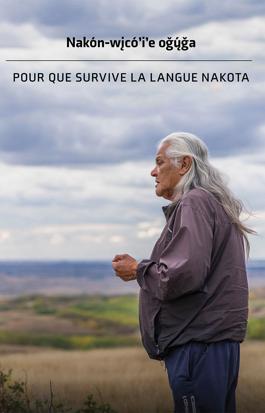
Pour que survive la langue nakota, Louise BigEagle, provided by the National Film Board of Canada