The NFB is committed to respecting your privacy

We use cookies to ensure that our site works efficiently, as well as for advertising purposes.

If you do not wish to have your information used in this way, you can modify your browser settings before continuing your visit.

Learn more
Skip to content Accessibility

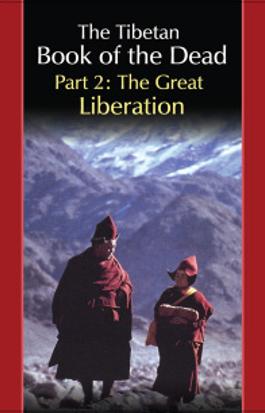
The Tibetan Book of the Dead: The Great Liberation

The Tibetan Book of the Dead is a two-part series that explores ancient teachings on death and dying. It was filmed over a four-month period on location in the Himalayas where the original text still yields an essential influence over people's views of life and death. The Great Liberation, is a docudrama which, in the company of an old Buddhist lama and a 13-year-old novice monk, leads us into the very foundations of Buddhist philosophy--the search for compassion and truth. Pema Choden, the lama, and Tubten, the young monk, read from the texts of The Tibetan Book of the Dead …

Your rental expires on
None
You've already purchased this film.
Download it from My purchases.

Details

The Tibetan Book of the Dead is a two-part series that explores ancient teachings on death and dying. It was filmed over a four-month period on location in the Himalayas where the original text still yields an essential influence over people's views of life and death. The Great Liberation, is a docudrama which, in the company of an old Buddhist lama and a 13-year-old novice monk, leads us into the very foundations of Buddhist philosophy--the search for compassion and truth. Pema Choden, the lama, and Tubten, the young monk, read from the texts of The Tibetan Book of the Dead as they conduct the 49 days of final rites for a deceased Himalayan villager. We must all face the death of somebody we love, as well as our own death. This film helps us to prepare for these inevitabilities.

  • script
    Shinichi Nakazawa
  • music
    Toshiyuki Honda
  • camera
    Hideo Saito
    Shuji Kawashita
  • editor
    Mitsunori Morimoto
    Judith Merritt
    David Verrall
  • sound effects
    Masayuki Onoe
  • video FX
    Masato Iizuka
  • re-recording
    Yoshinori Kawabata
    Jean-Pierre Joutel
  • project coordinator
    Toru Hirota
  • location coordinator
    Sonam Norboo
  • director
    Hiroaki Mori
    Yukari Hayashi
    Barrie McLean
  • producer
    Atsunori Kawamura
    Naoyuki Kibe
    Barrie McLean
    David Verrall
  • electronic imaging
    Eve Ramboz
  • narrator
    Leonard Cohen
  • consultant - narration
    Douglas Penick
  • animation
    Ishu Patel
  • video post-production
    Louis Girardin
    Michel Arsenault
  • studio administrator
    Carrol Smith

Education

Ages 15 to 17

Notes

Students will research the historical origins of Buddhism, as well as its spread and influence throughout Asia, and beyond. Advanced students can investigate the role of Buddhism in the modern world of developing economies, or the growing popularity of Buddhism in the West. Students of religious studies will do a comparative analysis of Buddhist philosophy and another religion. Integrating art and geography, students will research a famous Buddhist temple or monument and do an oral presentation with maps and other visual supports.

More educational content

The Tibetan Book of the Dead: The Great Liberation
Purchase options
Licence Information
Already paid to see this film?
Licence Information
Download licence details
Personal & Single-Classroom Use

Who it’s for:

Individuals watching for personal use, and parents or teachers wishing to screen a film for a single class in Canada.

What it allows:

  • Private, personal viewing in Canada and worldwide.
  • Screening the film for a single class in Canada.
  • Downloading and watching offline.

What it does not allow:

  • Screenings or events for multiple classes, school boards, or campus-wide events.
  • Community, public or institutional screenings or events.

Bonus materials are not included with the downloaded film.

Institutional Use

Who it's for:

Organizations, government departments, businesses and non-profits. For other institutions seeking licensing options, please contact info@nfb.ca .

What it allows:

  • Internal screenings for employees, members or patrons.
  • Screenings open to the public on the organization’s premises, with no admission fee and outside the commercial cinema circuit.
Looking to host a one-time public screening instead?

Who it's for:

Public libraries, community groups, NGOs and other organizations wishing to host a one-time public screening in Canada with no admission fee.

How to request a screening:

Complete the “Request to screen an NFB film” form.

For any questions, email communityscreenings@nfb.ca.

Streaming restrictions

Films purchased as downloads (DTO) cannot be hosted on a streaming server without prior authorization.

To request permission to add these films to an institutional or educational streaming server, contact info@nfb.ca.