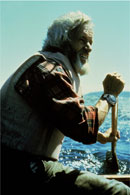
Bill Mason
Born in Winnipeg, Manitoba, Bill Mason (1929–1988) was a visionary Canadian director, animator, cinematographer, author, canoeist, naturalist and wilderness artist whose work left a lasting mark on both cinema and outdoor culture.
After graduating from the University of Manitoba School of Art in 1951, Mason explored a wide range of visual arts—painting, graphic design, illustration, cartooning and layout—before turning to film animation in 1958. He began freelancing as an animator and cinematographer for Crawley Films and soon joined the National Film Board of Canada, where from 1962 to 1984 he became one of its most celebrated directors.
Over two decades at the NFB, Mason wrote, directed, shot, edited and, frequently, animated more than 20 films, blending technical mastery with a profound respect for the natural world. Early shorts like Wilderness Treasure (1962) and The Voyageurs (1964) earned critical acclaim, while Paddle to the Sea (1966) and The Rise and Fall of the Great Lakes (1968) showcased his ability to combine storytelling, breathtaking visuals and environmental insight. Wolves captivated him, inspiring documentaries such as Death of a Legend (1971), Cry of the Wild (1972) and Wolf Pack (1974), which captured their behaviour and dispelled widespread myths. Cry of the Wild, his only feature-length film, became the NFB’s most commercially successful feature, grossing over a million dollars in its first week.
Canoeing was central to Mason’s life. He refined Canadian-style paddling techniques and shared them through films such as Song of the Paddle (1978) and books like Path of the Paddle: An Illustrated Guide to the Art of Canoeing (1980). His Path of the Paddle (1977) film series, from Solo Basic to Doubles Whitewater, remains essential for paddlers and outdoor enthusiasts. Mason’s mastery of whitewater and expedition canoeing earned him the title “patron saint of canoeing.”
His artistry extended to painting, illustration and environmental advocacy. His beloved red Chestnut Prospector canoe now resides at the Canadian Canoe Museum. Throughout his long career, Mason earned four Canadian Film Awards, two BAFTAs and two Academy Award® nominations. He was elected to the Royal Canadian Academy of Arts in 1974.
Mason’s books, artwork and cinematic films are an enduring celebration of adventure and the beauty of the wild. In 1998, he was honoured with a Canadian postage stamp, a lasting tribute to a life devoted to nature and creativity.